TempusBack

Reclaim
your time.

You do have time. Let’s find it.

See where your hours actually go. Find what is quietly taking them. Turn the pattern into a plan, and put the time back where it belongs.

Download on the App Store
Scroll to see more ↓
The long arithmetic

4 hours a day is 10 years of your life.

What your daily phone habit adds up to over a lifetime. Move the slider to see yours.

4ha day
1h4h8h
10.3
years of your life on the phone, at 4h a day*
61full days a year
25%of your waking hours
28ha week

Now run it the other way.

What each kind of tool gives back at 4h a day.**

12.8 days back in your first year with TempusBack · 5.9h a week to start
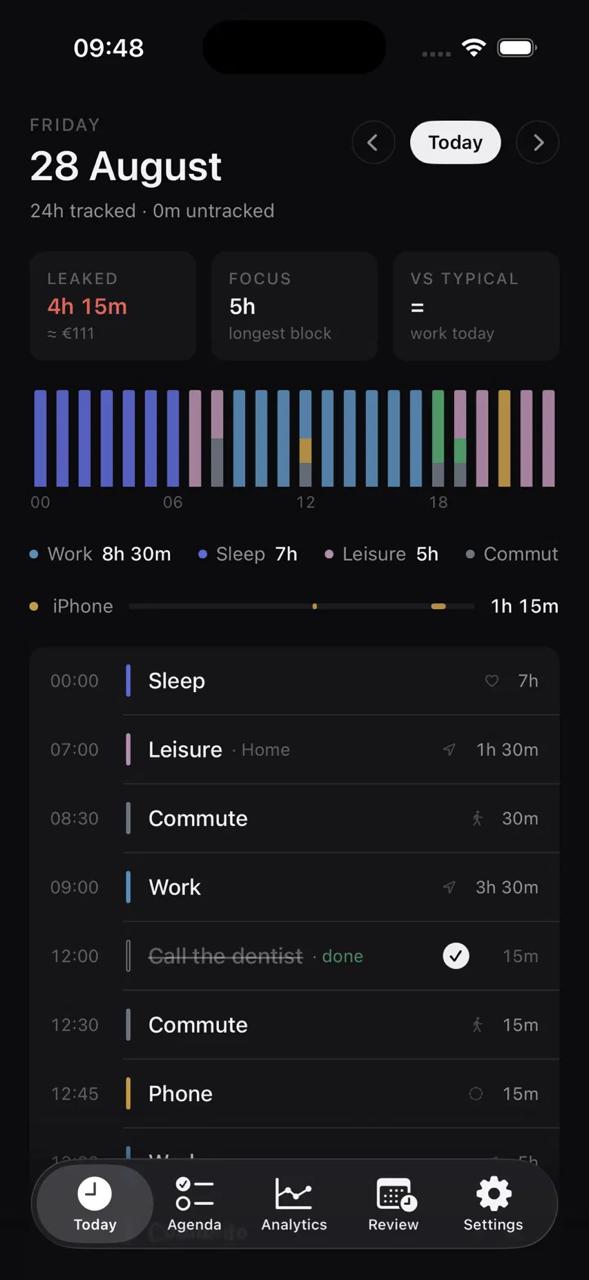
    TempusBack day view showing every block of a tracked day
    Know your day

    One day, fully accounted for.

    Sleep, work, commute, leisure, phone. Every block on the timeline, with nothing left as “where did the day go”.

    24h

    tracked · 0m untracked

    4h 15m

    leaked on this day

    5h

    longest focus block

    1h 15m

    on the phone

    New data. New perspective.

    The patterns only show up over time.

    One day is an anecdote. A week is evidence. As your history grows, TempusBack surfaces what is impossible to see a day at a time.

    The week in one screen

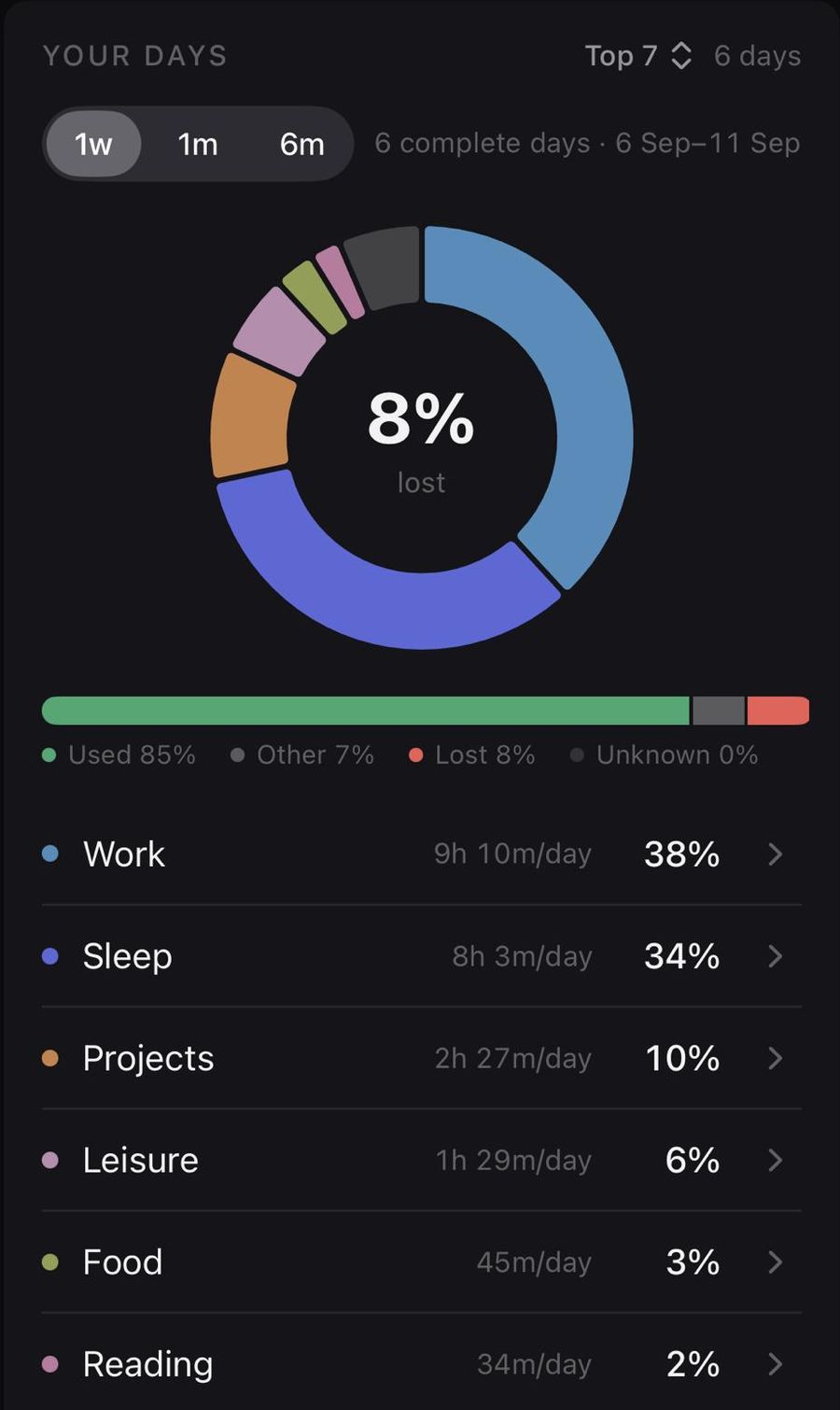
    Where it all went.

    Every part of your life ranked by the hours it really took and the time nobody chose pulled out and named. One tracked week and the guessing is over.

    TempusBack week view ranking where your time went
    Screen time, with consequences

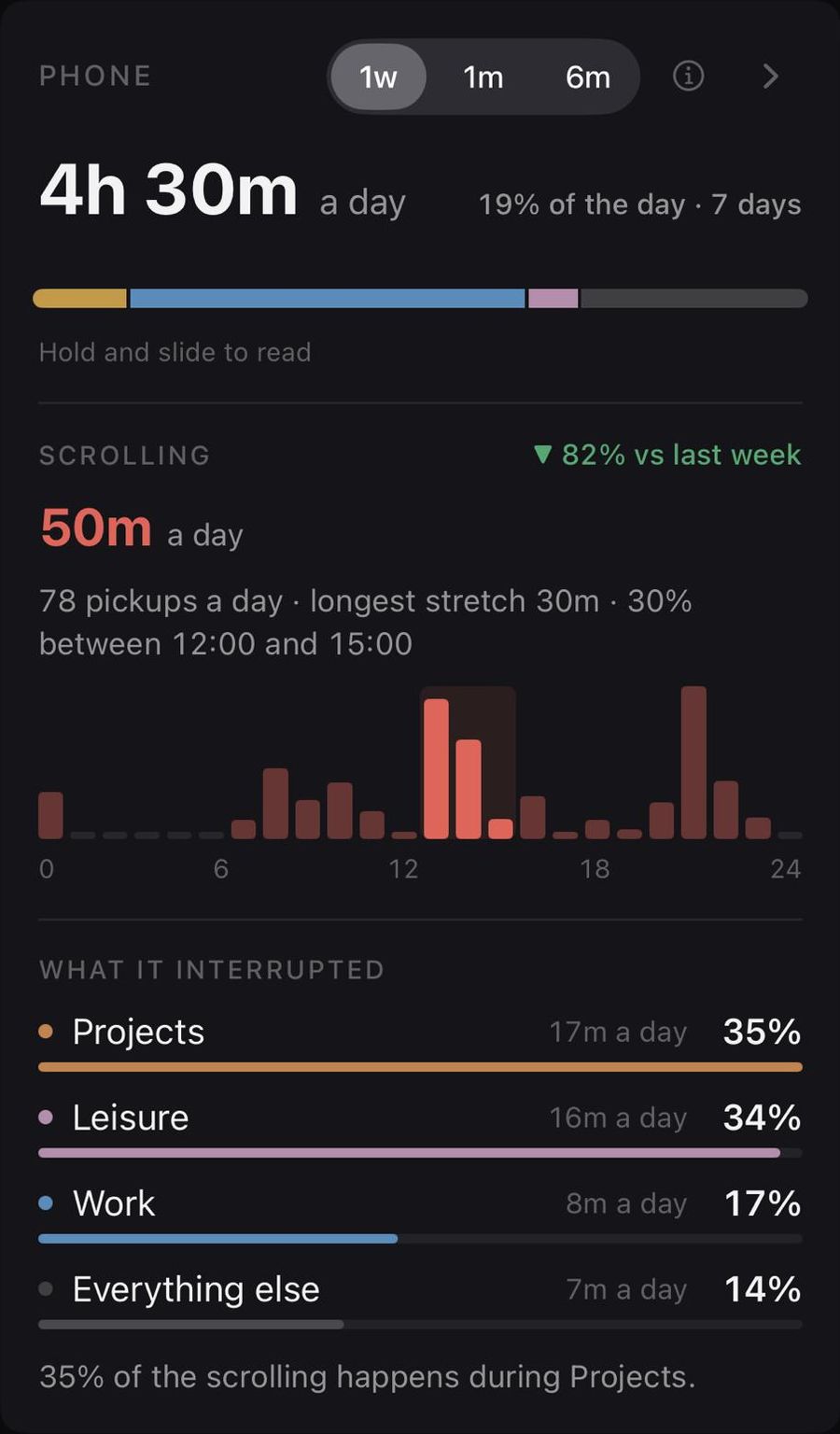
    Know what your phone costs you.

    Other apps count your minutes. TempusBack shows you what those minutes interrupted: the project, the evening, the work you meant to finish. That is the number that actually changes something.
    TempusBack phone view showing what scrolling interrupted
    From insight to action

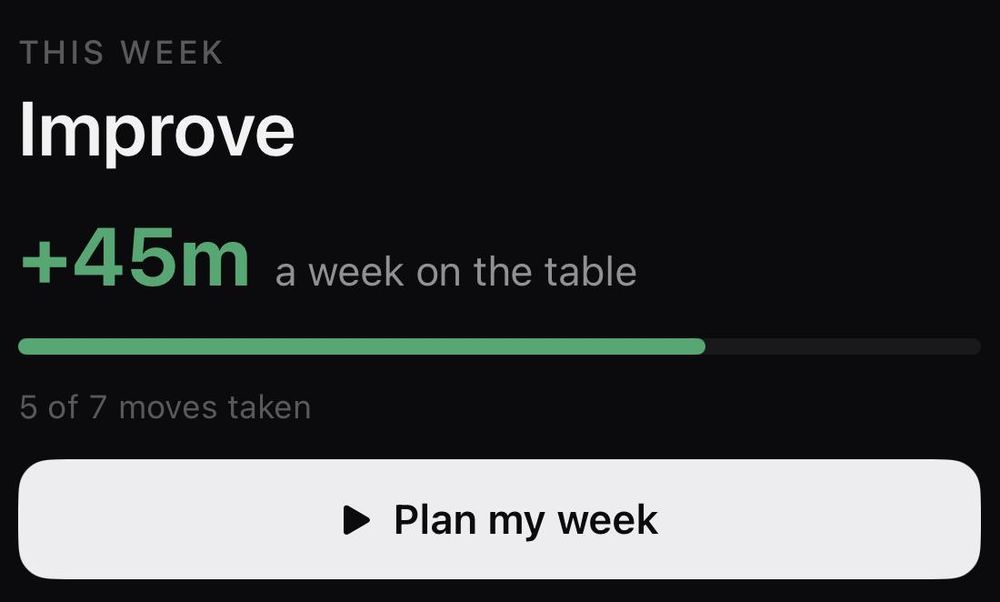
    Then it becomes a plan.

    Every week, your own patterns come back as a short list of moves, with the time each one hands you. No streaks to protect, no guilt. Just the next thing worth doing.
    TempusBack weekly plan with the time each move gives back
    On the App Store

    You do have time. Let’s find it.

    Free to download on iPhone. See where this week went, and take the time back.

    Download on the App Store
    Notes
    1. * Lifetime figures assume 62 remaining years and 16 waking hours a day. In the app they use your real average.
    2. ** Each estimate applies the reduction measured in the studies below to the daily phone time you choose with the slider. The studies ran for 2 to 12 weeks and a meta-analysis found these effects fade over time [5], so the curves assume each tool’s effect halves every year; that is why they level off. Some studies measured only the apps people chose to cut down, so savings on your total phone time may be lower. TempusBack’s estimate pools the two studies of tools that, like TempusBack, show people their own usage, work with their personal goals and don’t block apps: 21% [1] and 38% [6], weighted by number of participants ≈ 31%. Both studies were small (58 people in total) and short, and [6] also used in-the-moment reminders; this is not a study of TempusBack itself. App limits cut time on the limited apps by 16%, but about half of it moved to other apps [4].
    3. [1] Hiniker, Hong, Kohno & Kientz (2016). MyTime: Designing and evaluating an intervention for smartphone non-use. CHI ’16. doi.org/10.1145/2858036.2858403
    4. [2] Holte & Ferraro (2020). True colors: Grayscale setting reduces screen time in college students. The Social Science Journal. doi.org/10.1080/03623319.2020.1737461
    5. [3] Zimmermann & Sobolev (2023). Digital strategies for screen time reduction: A randomized field experiment. Cyberpsychology, Behavior, and Social Networking, 26(1). doi.org/10.1089/cyber.2022.0027
    6. [4] Allcott, Gentzkow & Song (2022). Digital addiction. American Economic Review, 112(7). doi.org/10.1257/aer.20210867
    7. [5] Monge Roffarello & De Russis (2023). Achieving digital wellbeing through digital self-control tools: A systematic review and meta-analysis. ACM TOCHI, 30(4). doi.org/10.1145/3571810
    8. [6] Mertens, Brockmeier, Roitzheim, Radtke, Dingler & Keller (2026). Promoting self-regulated social media use on smartphones with a mobile intervention app (Wellspent): Randomized controlled trial. JMIR mHealth and uHealth, 14, e56824. doi.org/10.2196/56824
    See all the numbers
    Tool typeReductionPer day, at the startFirst yearOver 3 yearsStudy